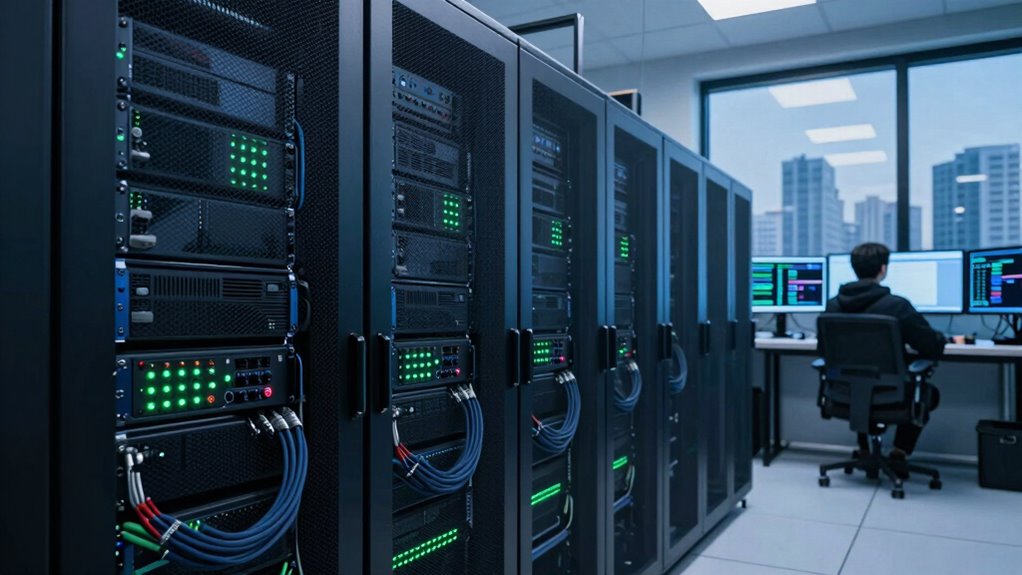

To choose colocation with reliable power backup, start by matching your uptime goals to the data center’s power architecture and redundancies, like N+1 feeds and diverse sources.
Look for robust UPS systems for immediate transitions and generators for longer outages, plus regular maintenance and tested transfer switches.
Check SLAs, RPOs, and RTOs, and demand third-party audits.
Consider local reliability in Hyderabad, on-site generation, and cooling backups.
If you keep digging, you’ll uncover how to compare options in depth.
Deploy confidently with Top Server Rental Hyderabad offering flexible configurations and support.
Brief Overview
- Assess uptime goals and risk tolerance to define required SLAs, RPOs, and RTOs for the colocation. Verify power architecture: N+1 redundancy, diverse feeds, tested switchover, and on-site generation capabilities. Evaluate power quality and cooling systems with monitoring dashboards and routine maintenance schedules. Inspect generator and UPS roles, maintenance practices, fuel containment, and commissioning procedures. Review third-party audits, documented testing, and penalties for SLA breaches to ensure measurable reliability.
How to Evaluate Backup Power for Colocation
Evaluating backup power for colocation starts with clarity about your uptime needs and risk tolerance. You’ll map critical workloads, acceptable outage windows, and recovery targets so you can size safeguards correctly. When you assess power quality, look for clean, stable feeds with minimal sag and harmonics, plus rapid fault isolation. Inspect redundancy: N+1 or better, diverse feeders, and tested switchover procedures. Demand documented maintenance windows, battery health checks, and proven component lifecycles. Review monitoring dashboards that warn you before issues hit, and ensure alarms reach on-call personnel instantly. Verify environmental controls align with power plans, because heat and power interact. Confirm service level commitments include incident response times, recovery sequencing, and post-event audits. Finally, request transparent warranties and replacement timelines for critical components. Safety-minded choices protect people, data, and uptime.
Generators vs. UPS: Which Backup Fits Hyderabad Data Centers?
Hyderabad data centers typically rely on both generators and UPS systems to cover power gaps, but each plays a distinct role in uptime strategy. You’ll choose based on speed, duration, https://serverrentalsindia.in/ and safety. UPS units provide immediate, clean power during transitions, reducing voltage dips that can damage equipment. They’re your first line of defense, delivering instant protection while generators start. Generators, in turn, supply sustained power for longer outages and help avoid battery depletion. For safe operation, ensure proper ventilation, regular maintenance, and fuel containment. Assess load profiles, N+1 redundancy, and environmental safeguards to minimize risk. Coordinate commissioning with qualified technicians, verify automatic transfer switches, and document tests. A balanced approach delivers rapid protection and reliable, extended power, aligning with safety-focused data center standards.
Reliability in Practice: SLAs, RPOs, and RTOs Explained
Reliability in practice boils down to three metrics you’ll use to plan and measure uptime: SLAs, RPOs, and RTOs. SLAs define guaranteed uptime and responsibilities, so you know what you’re protected against and what’s expected if service dips. RPOs tell you the maximum data loss you’ll accept after an incident, guiding backup frequency and data integrity checks. RTOs specify the maximum downtime you can tolerate, shaping recovery targets and testing cadence. In colocation, verify providers publish clear, measurable values and enforce penalties for failures. Demand consistency across facilities, not just promises. Regular drills confirm recovery steps, data restoration, and failover timing meet your expectations. Align these metrics with your safety requirements, regulatory needs, and business continuity plans for dependable power-backed operations.
Hyderabad-Focused Considerations for Selecting a Facility
When choosing a facility in Hyderabad, start by aligning power reliability with local grid stability and available redundancy options. In this market, you’ll value facilities that offer robust on-site generation, diverse power feeds, and automatic failover to backup systems. Prioritize data centers with proven uptime histories and transparent maintenance schedules, so you can gauge risk without guesswork. Consider proximity to reliable utility substations and evaluate the facility’s emergency power procedures, including transfer switch testing and battery health monitoring. Safety-minded choice-makers should verify environmental controls, fire suppression reliability, and secure access to critical rooms. Demand clear incident reporting, root-cause analysis, and continuous improvement commitments from operators. Finally, confirm redundant cooling and robust physical security align with your organization’s risk tolerance.
How to Shortlist a Managed Colocation Partner With Solid Backup Power
Start by defining your backup-power priorities and the level of redundancy you’ll require from a managed colocation partner. Then, shortlist candidates that clearly disclose power architecture, generator fleet size, fuel strategy, and battery-backup approach. Look for partners with N+1 or better redundancy, diversified power feeds, and tested failover procedures. Verify maintenance cadence, uptime histories, and documentation of scheduled outages. Request third-party audits or certifications related to emergency power systems and safety standards. Ask about on-site staff availability, response times, and a clear incident communication plan. Compare SLAs for recovery time objectives and recovery point objectives, ensuring penalties align with risk tolerance. Finally, validate location risk exposure, environmental controls, and fire-suppression alignment with your safety requirements. Choose a partner whose practices consistently demonstrate reliability and transparent reporting.
Frequently Asked Questions
What Is the Practical Power Redundancy Cost Impact?
The practical cost impact varies, but expect higher upfront CAPEX for redundancy gear and ongoing OPEX for power monitoring and maintenance; you’ll gain uptime, risk reduction, and potential penalties avoided as you invest in dependable backups.
How Is Backup Power Tested on Schedule?
You schedule regular backup power tests, following your site’s documented plan, test intervals, and safety procedures; you verify generator runs, transfer switches, battery banks, and ATS responses, log results, and promptly address any faults or warnings.
Do Providers Offer On-Site Battery Disposal Policies?
Yes, providers typically offer on-site battery disposal policies. You should verify that they follow regulatory guidelines, use certified vendors, provide chain-of-custody documentation, and offer recycling or safe recycling options for end-of-life battery packs.
Can Power Backups Scale With Demand Spikes?
Yes, power backups scale with demand spikes: you’ll get modular UPS capacity, scalable generators, and automated load shedding, ensuring your services stay online during surges while you monitor performance and maintain safety protocols.
What Is the Typical Data Center Cooling Impact During Outages?
During outages, expect cooling to drop significantly, risking equipment overheating; you’ll notice reduced air flow, warmer risers, and potential thermal throttling. You should implement redundant cooling, monitor temps closely, and follow safety procedures for shutdowns.
Summarizing
You should prioritize a data center with proven, robust backup power and clear, enforceable SLAs. Ask for realized RPOs and RTOs, not promises. Compare generators and UPS—understand runtimes, fuel redundancy, and maintenance plans. Consider Hyderabad-specific risks and utility resilience, plus facility certifications. Shortlist partners that provide transparent reporting, predictable outages, and proactive cooling. Choose a provider whose backup strategy aligns with your tolerance for downtime and your budget, and insist on detailed, written backup power commitments. Protect uptime with Reliable Server Rental Hyderabad backed by strong technical assistance.